From Luzon to Mindanao: Delivering Consistent Field Research Across the Philippines
Conducting nationwide field research in the Philippines is a challenge that goes far beyond covering locations on a map. With thousands of…
Read ArticleThe global technology industry is entering a period in which location, supply-chain security, skilled manpower, political relationships, infrastructure, and market access are becoming almost as important as production cost. Semiconductors, artificial intelligence infrastructure, advanced electronics, data centers, electric vehicles, telecommunications equipment, and other technologies now sit at the center of economic and national-security strategies. For […]
By Rold Yanga
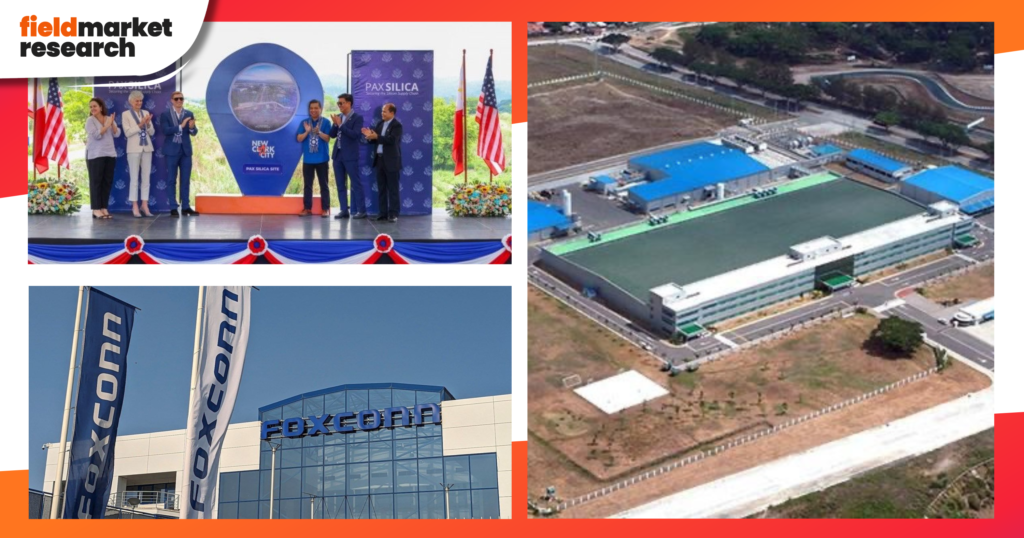
The global technology industry is entering a period in which location, supply-chain security, skilled manpower, political relationships, infrastructure, and market access are becoming almost as important as production cost. Semiconductors, artificial intelligence infrastructure, advanced electronics, data centers, electric vehicles, telecommunications equipment, and other technologies now sit at the center of economic and national-security strategies.
For the Philippines, this creates an important opportunity.
The country should not be viewed as a newcomer to electronics manufacturing. It already has a substantial semiconductor and electronics industry. In 2025, Philippine electronics exports reached approximately US$49.64 billion and represented 58.81% of total Philippine exports. Semiconductor manufacturing services account for a large portion of the country’s electronics industry, while existing capabilities include integrated-circuit packaging, printed-circuit-board assembly, and full product assembly.
The bigger question is therefore not whether the Philippines can participate in the global technology industry. It already does.
The more important question is: Can the Philippines move further up the technology value chain and become one of Asia’s major centers for semiconductors, advanced manufacturing, AI infrastructure, and next-generation technology?
From a field market research and investment perspective, FMR believes the opportunity deserves serious attention.
When discussing the possibility of becoming another important Asian semiconductor center, it is tempting to compare the Philippines immediately with Taiwan.
That comparison needs some qualification.
Taiwan’s strength in advanced semiconductor fabrication was built over decades and includes a highly developed ecosystem of wafer fabrication, semiconductor design, equipment, materials, suppliers, engineers, research institutions, and specialized infrastructure. The Philippines cannot simply reproduce that ecosystem overnight.
However, the Philippines does not have to start from zero.
The Semiconductor and Electronics Industries in the Philippines Foundation reports that the country’s electronics industry is concentrated in Metro Manila, CALABARZON, Northern and Central Luzon, and Cebu, with capabilities ranging from IC packaging to PCB assembly and complete product assembly.
The Philippine government itself has identified the opportunity to move into higher-value activities, including wafer fabrication, semiconductor design, and front-end manufacturing.
That is the opportunity investors should examine.
Instead of asking whether the Philippines can immediately become “the next Taiwan,” a better investment question is:
Which portions of the global semiconductor and advanced-technology value chain can the Philippines competitively capture over the next 10 to 20 years?
The answer could be substantial.
One of the Philippines’ greatest long-term assets is its people.
The official 2024 Census recorded a Philippine population of 112,729,484. More importantly for investors, approximately 74.95 million people, or 66.7% of the household population, were between 15 and 64 years old.
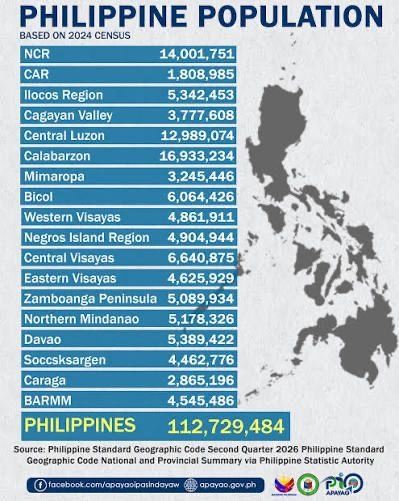
This creates a significant labor pool for industries requiring technicians, engineers, production workers, supervisors, software professionals, quality-control personnel, logistics workers, administrative staff, and other supporting occupations.
The Philippines also has multiple pathways into technical employment.
Not every semiconductor employee needs to hold an advanced engineering degree. A sophisticated manufacturing ecosystem requires workers at many skill levels—from engineers and programmers to technicians, equipment operators, quality inspectors, maintenance specialists, logistics personnel, and production supervisors.
The country therefore has an opportunity to connect senior-high-school education, vocational and technical training, universities, engineering programs, and company-based training directly to future technology clusters.
The Philippine Skills Framework already brings together agencies including DTI, TESDA, DOLE, DepEd, CHED, PRC, DICT and DOST to align workforce competencies with changing industry requirements.
For investors, the size of the population is only the beginning. What matters is whether that population can be converted into an increasingly specialized technology workforce.
That will require sustained investment in training.
Another advantage is communication.
English is widely used throughout Philippine education, business, technology, engineering, outsourcing, government, and international commerce. For multinational companies, this can reduce one of the practical barriers encountered when establishing operations abroad.
Technical documentation, training programs, operating procedures, engineering manuals, quality-control systems, software interfaces, and international management communications are frequently written in English.
This matters in technology manufacturing.
A company establishing an operation in the Philippines can recruit employees who are generally accustomed to working with English-language instructions and then provide company-specific technical training.
Combined with the country’s long history of working with American, Japanese, Korean, European, Taiwanese, and other multinational businesses, this can make cross-border collaboration easier.
The advantage is not that every Filipino is automatically prepared for semiconductor manufacturing. Specialized manufacturing requires specialized training.
The advantage is that the country has a large trainable workforce and a relatively favorable communication environment in which that specialized knowledge can be transferred.
Look at the Philippines on a map and its strategic importance becomes clearer.
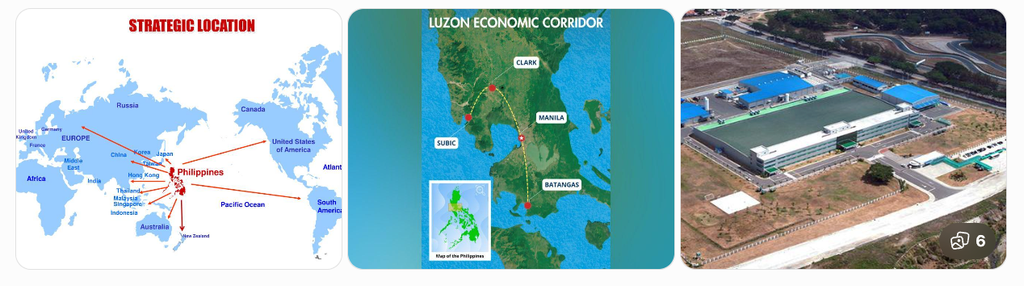
The Philippines sits on the western edge of the Pacific and close to several of the world’s most important technology and manufacturing economies, including Taiwan, Japan, South Korea, China, Singapore, Malaysia, and Vietnam.
At the same time, the Pacific provides the country’s natural commercial orientation toward the United States and the Americas, while established maritime and air networks connect Philippine production to Europe.
This is already reflected in actual trade.
In 2025, major destinations for Philippine electronics included Hong Kong, the United States, China, Japan, Singapore, Germany, Taiwan, Thailand, Malaysia, and the Netherlands.
In other words, the Philippines does not merely have a theoretically useful location. Its electronics industry is already connected to major Asian, American, and European markets.
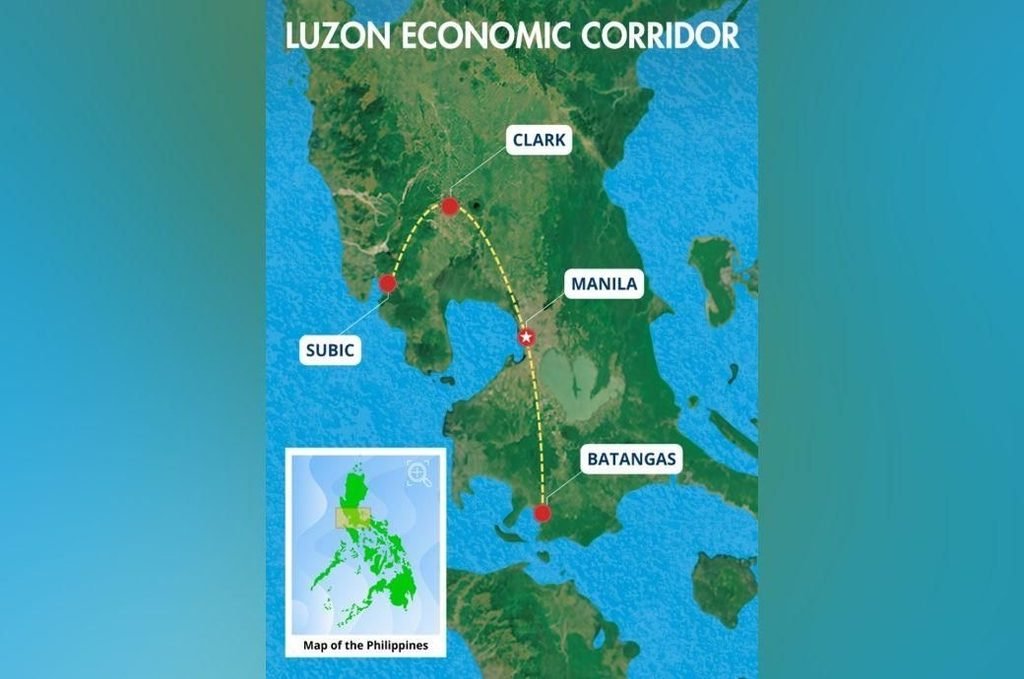
One of the most important developments is the Luzon Economic Corridor.
The Philippines, United States, and Japan launched the corridor initiative in 2024 to improve connectivity between Subic Bay, Clark, Manila, and Batangas. Planned areas of investment include rail, port modernization, clean energy, semiconductor supply chains, agribusiness, and other infrastructure.
This matters enormously for advanced manufacturing.
A semiconductor or electronics facility does not operate independently. It depends on an ecosystem:
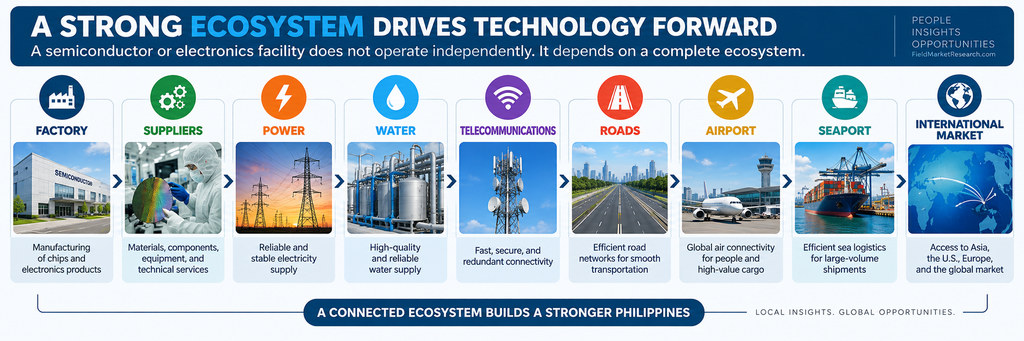
If those connections are inefficient, production becomes more expensive.
The Luzon Economic Corridor therefore has the potential to create something more valuable than individual factories: an integrated advanced-manufacturing ecosystem.
Subic provides major maritime capabilities. Clark provides an international airport, industrial zones and extensive available development areas. Manila remains the country’s largest business and financial center. Batangas provides another important industrial and maritime gateway.
According to the Philippine Board of Investments, the Subic, Manila and Batangas ports collectively handle around 80% of Philippine port traffic.
Clark, meanwhile, already has more than 1,200 locators and approximately 151,000 workers, alongside international airport access, road networks, telecommunications infrastructure, and logistics operators.
These are important building blocks for a technology corridor.
The opportunity became considerably more concrete in 2026.
The Philippines and United States announced plans for a roughly 4,000-acre AI-native industrial acceleration hub in Clark, within the Luzon Economic Corridor. According to the Philippine Board of Investments, the proposed hub is intended to support critical-minerals processing, semiconductors, advanced manufacturing, and artificial intelligence.
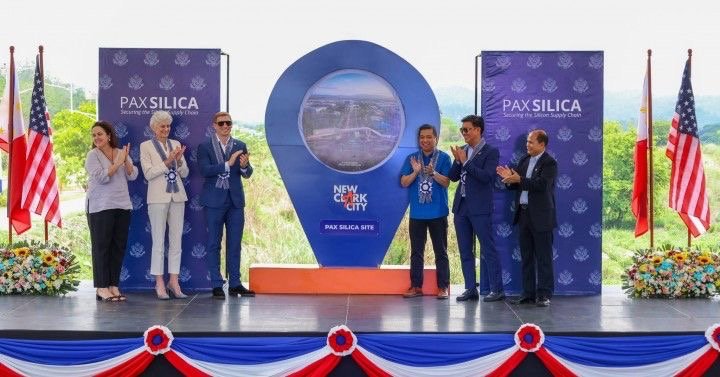
This is precisely the kind of clustering strategy that could help the Philippines move beyond traditional electronics assembly.
It could create an environment where semiconductor operations coexist with AI infrastructure, advanced manufacturing, logistics, critical-material processing, engineering, data infrastructure, and supporting industries.
That combination can generate a multiplier effect.
One technology manufacturer attracts suppliers. Suppliers create demand for specialized logistics. Manufacturing creates demand for engineering and technical education. Engineers create opportunities for R&D. Larger technology clusters create demand for data centers, software, automation, cybersecurity and professional services.
Eventually, a manufacturing location can become a technology ecosystem.
There is one point we should be careful about before publishing this article.
I could not verify from reliable sources that Foxconn has formally selected the Luzon Economic Corridor for a major manufacturing facility. Current authoritative information does confirm major technology and semiconductor initiatives in the corridor—including the new Clark industrial hub—but I would not state that Foxconn has selected the corridor unless FMR has a separate verified source or direct information confirming it.
That distinction strengthens the credibility of the article.
The broader argument does not depend on Foxconn. The investment case for the Philippines is already substantial.
Another global trend is working in the Philippines’ favor: companies and governments increasingly want semiconductor supply chains distributed across multiple trusted locations.
The pandemic, geopolitical tensions, shipping disruptions, and semiconductor shortages demonstrated the danger of concentrating critical manufacturing in too few places.
The United States formally selected the Philippines for cooperation under the CHIPS Act’s International Technology Security and Innovation Fund, with the objective of exploring opportunities to expand and diversify the global semiconductor ecosystem. The initiative specifically examined the Philippine semiconductor ecosystem, regulatory framework, workforce and infrastructure requirements.
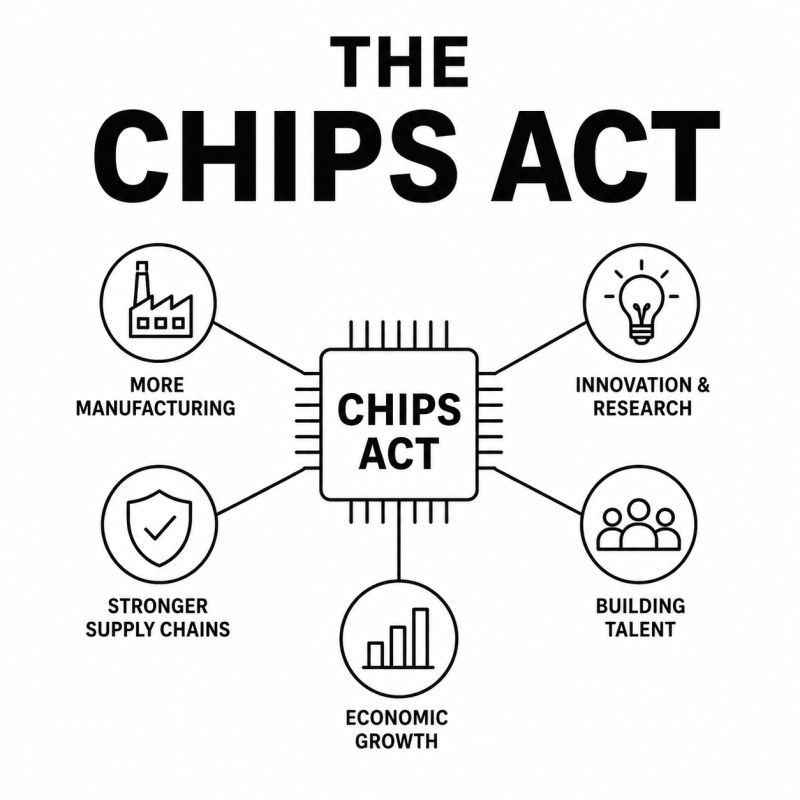
This is significant.
The Philippines is not simply declaring that it wants semiconductor investment. A major technology partner is already evaluating and supporting its role in a more diversified semiconductor supply chain.
Technology investment today cannot be separated completely from geopolitics.
Semiconductors, AI processors, telecommunications equipment, critical minerals, cloud infrastructure, and advanced manufacturing increasingly involve questions of supply-chain security and trusted international partnerships.
The Philippines has longstanding economic and security relationships with the United States and Japan and strong commercial relationships with Europe, South Korea and other advanced economies.
The U.S.-Japan-Philippines cooperation behind the Luzon Economic Corridor demonstrates how these relationships can translate into physical economic infrastructure.
For companies seeking to diversify production into countries that maintain strong relationships with major democratic economies, this can be an important consideration.
But the Philippines should continue maintaining broad commercial relationships. Semiconductor supply chains are global, and successful manufacturing requires interaction with suppliers and customers across Asia, Europe and the Americas.
A successful Philippine technology strategy should not focus exclusively on building advanced wafer fabs.
The opportunity is much broader.
The country could pursue a technology ecosystem encompassing:
This approach would allow the Philippines to expand from areas where it already has experience into progressively higher-value activities.
The Philippines’ island geography and access to surrounding seas also create interesting opportunities for digital connectivity and data infrastructure.
However, it is important not to say that being “surrounded by water” automatically makes the country ideal for semiconductor fabs or servers.
Data centers and semiconductor fabrication facilities have very specific requirements for reliable electricity, high-quality water, cooling systems, telecommunications redundancy, disaster resilience, and physical security.
For semiconductor fabrication in particular, large quantities of extremely high-purity water can be required. Seawater itself is not directly usable for these processes without treatment and desalination.
Similarly, Philippine exposure to typhoons, earthquakes and other natural hazards means investors must incorporate resilience into site selection and facility design.
These are challenges—but also opportunities for infrastructure investment.
A credible investment analysis should acknowledge the weaknesses as clearly as the strengths.
If the Philippines wants to compete for the next generation of semiconductor and technology investment, it must continue improving:
Energy reliability and cost. Advanced manufacturing requires stable, competitive, 24-hour power.
Water infrastructure. Semiconductor manufacturing can require large, reliable supplies of ultrapure water and sophisticated recycling systems.
Technical education. The country needs more semiconductor engineers, process engineers, technicians, materials specialists, automation professionals and chip designers.
Research and development. Universities, private companies and government institutions need stronger connections.
Domestic suppliers. More materials, components, tooling and services should eventually be produced locally rather than imported.
Logistics. Ports, airports, railways and highways must continue improving.
Regulatory predictability. Technology investors make decisions involving billions of dollars and decades of operation. Stable policy matters.
Disaster resilience. Facilities must be engineered for typhoons, earthquakes, flooding and other Philippine conditions.
These challenges should not discourage investment. They identify exactly where additional investment and government-industry cooperation are required.
The Philippines has something that many emerging technology locations do not have: an existing electronics industry, a population exceeding 112 million, a large working-age population, English-language capability, decades of multinational manufacturing experience, access to Asian supply chains, Pacific connectivity, and strengthening partnerships with major technology economies.
It also now has a developing geographic anchor through the Subic-Clark-Manila-Batangas Luzon Economic Corridor.
The next step is moving upward.
Assembly can lead to advanced packaging. Advanced packaging can attract materials and equipment suppliers. Manufacturing expertise can support semiconductor design. Technical manufacturing can stimulate automation and robotics. Semiconductor infrastructure can attract AI and data-center investment. Universities can increasingly align engineering programs with the requirements of these industries.
This is how an ecosystem develops.
Taiwan did not become a semiconductor leader overnight. Neither did South Korea, Japan, Singapore or the United States.
Industrial leadership is built over decades.
The Philippines now has an opportunity to begin the next stage of that journey.
At Field Market Research (FMR), we believe the opportunity should also be evaluated at the local level.
National statistics can identify the Philippines as an attractive investment destination, but selecting an actual manufacturing location requires much deeper research.
Before establishing a semiconductor plant, technology manufacturing facility, data center, supplier operation or logistics hub, investors need to understand the specific environment surrounding a proposed location.
That can include available manpower, salary expectations, technical skills, universities and vocational schools, electricity reliability, water supply, road access, port accessibility, airport connectivity, telecommunications, land availability, local suppliers, community acceptance, security, government support, environmental conditions, and future infrastructure projects.
This is where field market research becomes particularly valuable.
The question is no longer simply:
“Is the Philippines suitable for technology investment?”
The more useful questions are:
Where in the Philippines should the investment be located? What resources are actually available there? What problems could the investor encounter? What will operations cost? What does the local workforce look like? How resilient is the infrastructure? And what opportunities exist within the surrounding supply chain?
Those questions require information from the field—not only information available online.
After decades of participating in electronics manufacturing and more than 18 years of FMR’s own experience studying industries, infrastructure, communities, technology, telecommunications, agriculture, logistics and investment conditions across the country, we see an important opportunity emerging.
The Philippines does not need to become a copy of Taiwan. It has the opportunity to build its own position in the next generation of the global technology supply chain.
With the right infrastructure, education, investment policy, international partnerships and long-term industrial strategy, the Philippines could move from being an important participant in global electronics manufacturing to becoming one of Asia’s major centers for semiconductors, AI infrastructure and advanced technology production.
For global investors looking for their next Asian technology location, the Philippines deserves a much closer look.

Rold Yanga is a Senior Field Operations Manager at FMR with expertise in field data collection, interviewer supervision, respondent validation, CATI, CAPI, mystery shopping, and quality assurance for nationwide market research and fieldwork projects.

Conducting nationwide field research in the Philippines is a challenge that goes far beyond covering locations on a map. With thousands of…
Read Article
One crucial question must be answered before introducing a new product, entering a new market, or expanding a business: Are customers really…
Read Article