What Is Market Research? An Introduction to Understanding Market Research
One crucial question must be answered before introducing a new product, entering a new market, or expanding a business: Are customers really going to buy it? This is where market research becomes one of the most important tools for businesses of all sizes. Rather than relying on assumptions or guesswork, market research provides organizations with […]
By Rold Yanga
One crucial question must be answered before introducing a new product, entering a new market, or expanding a business:
Are customers really going to buy it?
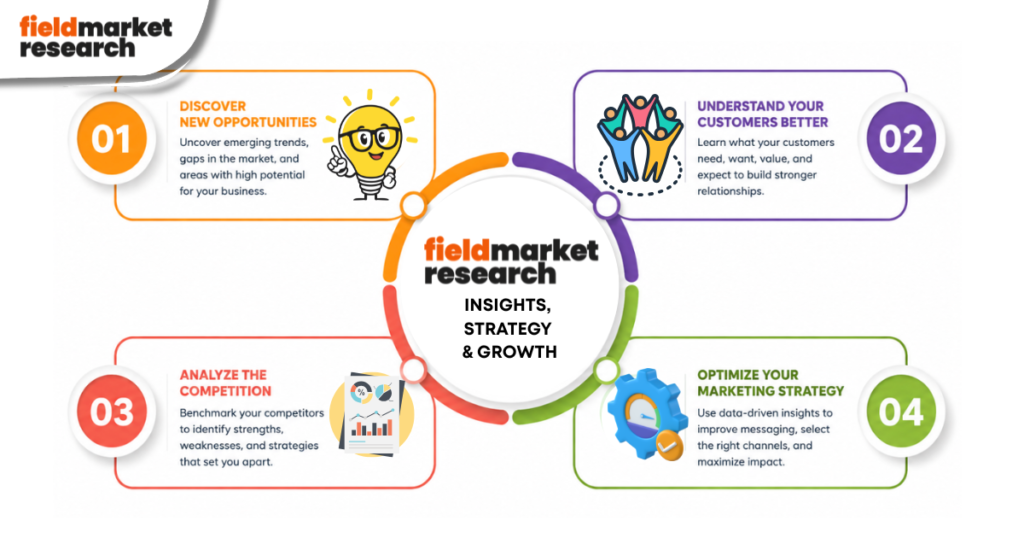
This is where market research becomes one of the most important tools for businesses of all sizes. Rather than relying on assumptions or guesswork, market research provides organizations with accurate information about their customers, competitors, and industry trends, enabling them to make informed business decisions.
Whether you are a startup, an established company, a government agency, or a nonprofit organization, understanding your market helps reduce risk, identify opportunities, and improve your chances of success.
What Is Market Research?
Market research is the systematic process of collecting, analyzing, and interpreting information about a target market, customers, competitors, and industry conditions. It helps organizations understand what consumers need, how they make purchasing decisions, and what factors influence market demand.
Rather than making decisions based on opinion or assumptions, businesses use market research to gather reliable data that supports:
Product development
Pricing strategies
Marketing campaigns
Customer experience improvements
Long-term business planning
Market research can be conducted before introducing a new product, entering a new geographic market, launching a new service, or reviewing an existing business strategy.
Why Is Market Research Important?
Today’s markets move quickly. Consumer preferences change, competitors introduce new products, and economic conditions can shift unexpectedly. Companies that continually gather market intelligence are often better equipped to respond to these changes.
Businesses use market research to:
Identify customer needs and expectations
Discover market opportunities
Minimize business risks before making major investments
Improve products and services
Measure customer satisfaction
Evaluate competitors
Support strategic business planning
Make evidence-based decisions using data rather than assumptions
By understanding the market before investing significant resources, organizations can avoid costly mistakes and improve their chances of success.
How Market Research Works
Professional market research projects follow a structured process to produce accurate, reliable, and actionable insights.
1. Define the Research Objective
Every successful market research project begins with a clearly defined business problem or opportunity. Without a clear objective, companies risk collecting unnecessary information that does not lead to meaningful business decisions.
Common research objectives include:
What do customers think about our product?
Which product features are most important?
How competitive is our pricing?
Is demand sufficient in a new market?
What improvements do customers want?
A clearly defined objective serves as the foundation of the entire research project.
Example
A beverage company plans to launch a new sugar-free energy drink in the Philippines. Before investing in manufacturing and advertising, the company wants to determine:
Whether consumers are interested in healthier energy drinks
Which flavors consumers prefer
The acceptable price range
Which age groups are most likely to become repeat buyers
Once the objectives are established, researchers develop the research plan.
This includes determining:
Target respondents
Sample size
Geographic coverage
Data collection method
Questionnaire design
Research timeline
Selecting the appropriate methodology ensures the results accurately represent the target market.
Example
For the energy drink study, researchers decide to:
Interview 1,000 consumers between the ages of 18 and 45.
Conduct surveys in Metro Manila, Cebu, and Davao.
Use Computer-Assisted Personal Interviews (CAPI) in supermarkets and convenience stores.
Ask questions about purchasing behavior, preferred brands, flavor preferences, and acceptable pricing.
This research design allows researchers to collect diverse consumer opinions from multiple locations.
3. Collect the Data
Once the research design is finalized, trained interviewers begin collecting information from qualified respondents.
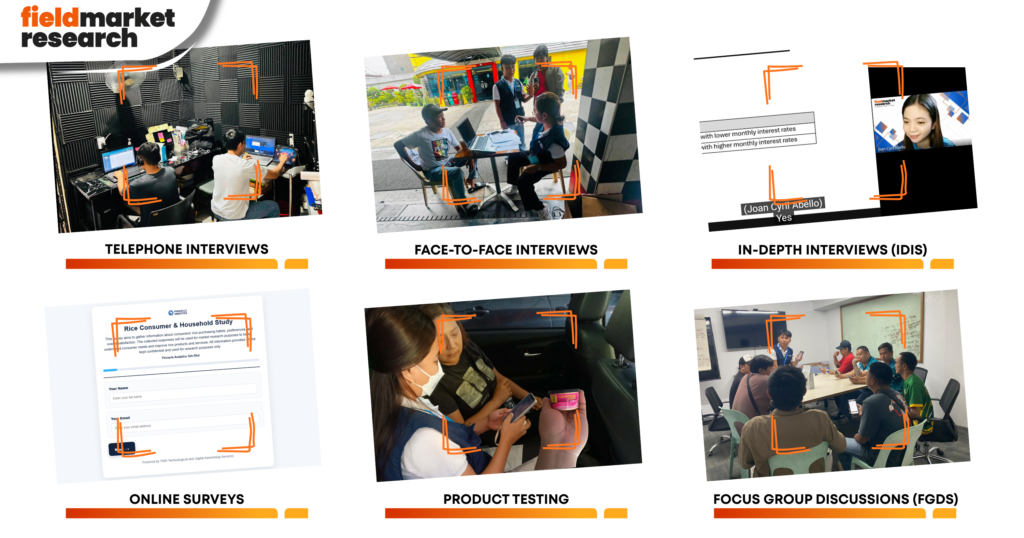
Common market research methods include:
Face-to-face interviews
Telephone interviews
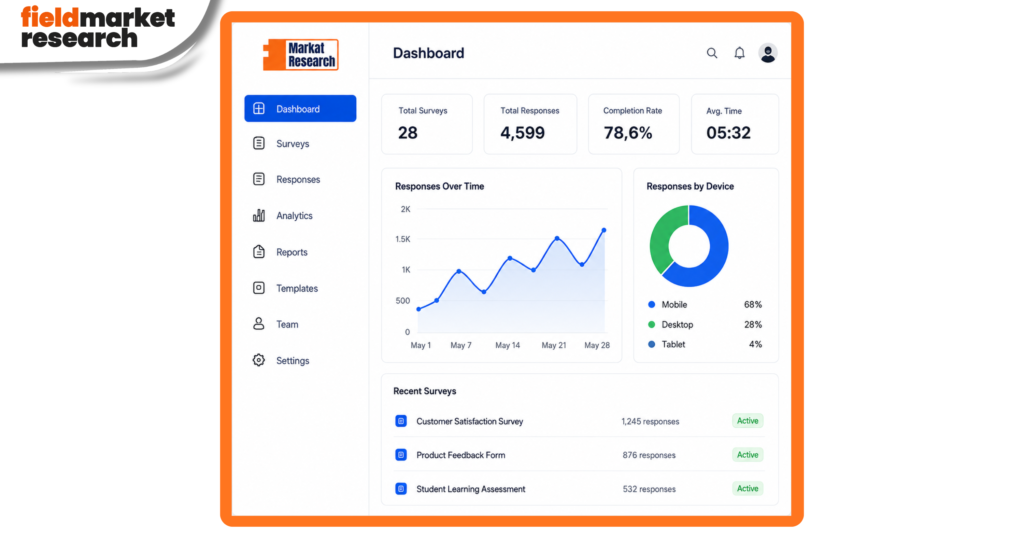
Online surveys
Focus Group Discussions (FGDs)
In-Depth Interviews (IDIs)
Product testing
Retail observations
Mystery shopping
Professional fieldwork includes interviewer training, respondent screening, quality monitoring, and strict validation procedures to ensure reliable data.
Example
Field interviewers visit selected shopping malls and supermarkets where beverage buyers frequently shop. Using tablets, interviewers ask standardized questions and electronically record responses, reducing manual errors while improving data accuracy.
4. Analyze the Data
After fieldwork is completed, researchers clean, validate, and analyze the collected information.
The analysis focuses on identifying meaningful patterns such as:
Consumer preferences
Purchase frequency
Brand awareness
Customer satisfaction
Price sensitivity
Regional differences
Purchasing behavior
The objective is to transform thousands of survey responses into actionable business insights.
Example
Researchers discover the following after analyzing the survey data:
68% of respondents prefer sugar-free beverages.
Citrus is the most preferred flavor.
Consumers are willing to pay ₱45 to ₱55 per bottle.
Young professionals purchase energy drinks more frequently than university students.
These findings help the company make informed product development decisions.
5. Present the Findings
The final stage is preparing a professional research report that summarizes the findings, conclusions, and recommendations.
A standard report typically includes:
Executive Summary
Research Methodology
Respondent Profile
Charts and Graphs
Key Findings
Conclusion
Strategic Recommendations
Business leaders use these insights to guide marketing strategies, pricing decisions, product improvements, and future investments.
Example
Based on the research findings, the company decides to:
Launch a citrus-flavored sugar-free energy drink.
Set the suggested retail price at ₱49.00.
Target urban professionals between the ages of 25 and 40.
Launch the product through supermarkets, convenience stores, and online grocery platforms.
Because these decisions are based on market research rather than assumptions, the company significantly reduces the risks associated with introducing a new product.
Types of Market Research
Market research generally falls into two main categories:
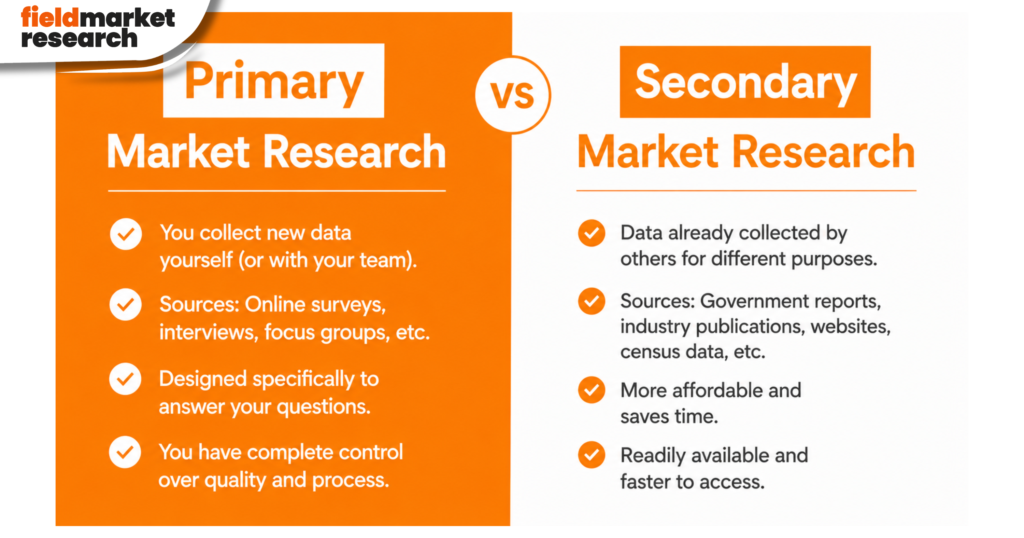
This infographic compares Primary Market Research and Secondary Market Research, highlighting their key differences, data sources, advantages, and when each research method is most appropriate for gathering business insights.
Primary Market Research
Secondary Market Research
Primary Market Research
Primary research involves collecting original information directly from respondents. Since the data is gathered specifically for the project, it provides highly relevant and customized insights.
Common examples include:
Surveys
Face-to-Face Interviews
Telephone Interviews
Focus Group Discussions (FGDs)
In-Depth Interviews (IDIs)
Product Testing
Customer Satisfaction Surveys
Secondary Market Research
Secondary research uses information that has already been published or collected by other organizations.
Common sources include:
Government statistics
Industry reports
Academic journals
Trade association reports
Company reports
Public databases
Secondary research is often conducted before primary research to better understand market conditions, industry trends, and available background information.
Keep Learning About Market Research
The basics of market research are the initial step in making better business judgements. In this tutorial, you’ve learned what market research is, why it’s important, how the research process works and the differences between primary and secondary research. These concepts form a good basis for understanding how businesses use reliable data to decrease risk, identify opportunities, improve products and services and better serve their customers.
Market research, in contrast, is a large and ever-changing field. With the emergence of new technology and changes in customer behaviour, organisations need to stay up to date on the latest research methods, industry developments, and best practices. If you are interested in customer satisfaction studies, product testing, public opinion surveys, retail audits, mystery shopping, or business intelligence, continuing to learn about market research will help you make more confident, data-driven judgements.
FMR Technological and Digital Advertising Services (Field Market Research) routinely publishes practical guides, industry insights and professional articles on the topics of market research, fieldwork, consumer behaviour and business intelligence. Our mission is to help businesses, government organisations, researchers and entrepreneurs better understand how research may help them to plan smartly and grow long term.
Connect with us for more useful articles, research tips and industry updates by following our official social media channels:
You may also read more articles and resources on the Field Market Research Blog, where we provide practical knowledge, field experiences, and expert perspectives to help you understand today’s shifting markets better.
Rold Yanga
Senior Field Operations Manager | Research Analyst
Rold Yanga is a Senior Field Operations Manager at FMR with expertise in field data collection, interviewer supervision, respondent validation, CATI, CAPI, mystery shopping, and quality assurance for nationwide market research and fieldwork projects.
The global technology industry is entering a period in which location, supply-chain security, skilled manpower, political relationships, infrastructure, and market access are…