Research on Mobile Phone Technology in Visayas and Mindanao, Philippines
The smartphone industry is evolving at a rapid pace, making it more and more critical for manufacturers, retailers, distributors and phone technology brands to gain insights into how Filipinos choose their mobile devices. Smartphones have evolved from being merely communication devices into a necessity for work, education, digital banking, online shopping, entertainment, photography, gaming, and social media. In an environment where consumer expectations are evolving, companies need trusted market intelligence to develop offerings and marketing strategies that genuinely mirror local demand.
To help guide these business decisions, FMR Technological and Digital Advertising Services (Field Market Research) conducted a large scale Mobile Phone Technology Research project in selected municipalities in Visayas and Mindanao, Philippines. The study was conducted to understand consumer buying behaviour, smartphone ownership, favourite brands, upgrade patterns and the factors that influence purchase decision.
The full results are confidential under our agreement with the client but we’re happy to share our fieldwork approach and a number of aggregated market insights to demonstrate our expertise in delivering national technology research while protecting all proprietary and client information.
Almost 20 years of experience in field research
For almost two decades, FMR has been involved in qualitative and quantitative market research throughout the Philippines, working with both local and international organisations. Our projects cover industries such as consumer electronics, telecommunications, agriculture, healthcare, financial services, retail, and government.
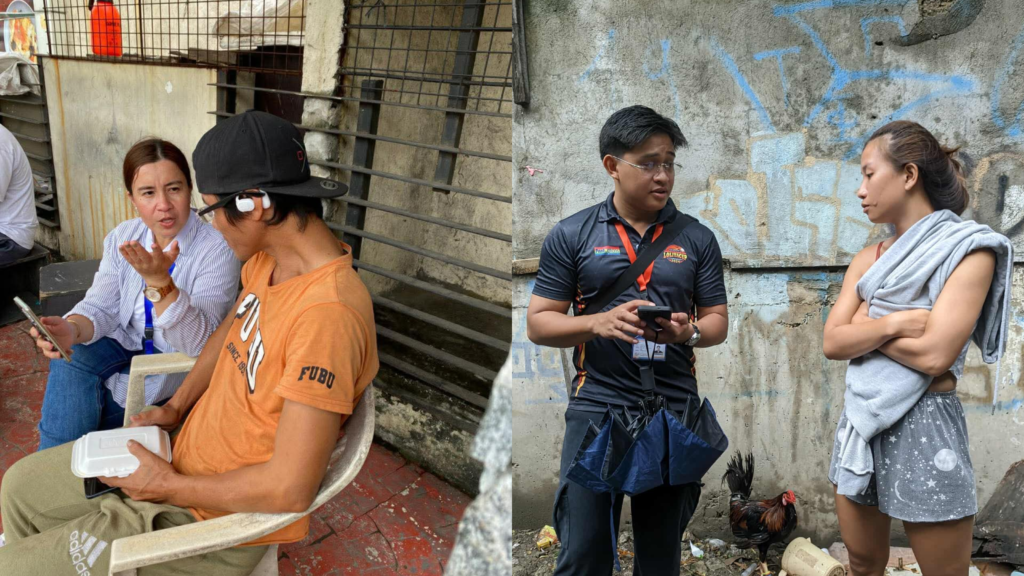
This mobile phone study required extensive coordination among several municipalities in the Visayas and Mindanao. Our fieldwork was conducted in collaboration with local communities and adhered to rigorous research protocols, respondent screening procedures, and quality assurance standards. All interviewers were briefed on the project and supervised to maintain consistency during the period of fieldwork.
We have experience conducting research in urban centres and remote communities, meaning we can provide reliable data while remaining professional, protecting respondent confidentiality and maintaining high standards of research.
Computer-Assisted Personal Interviewing (CAPI)
The study was conducted using Computer Assisted Personal Interviewing (CAPI), one of the most reliable methodologies for collecting quantitative data in face-to-face research.
Our interviewers used tablets with digital questionnaires instead of paper questionnaires, so responses could be captured accurately and validated in real time.
The use of CAPI provided several benefits:
- Higher data fidelity
- Logic for auto questionnaires
- Quick verification
- GPS-assisted field verification
- Reduced manual coding errors
- More effective quality control
| Higher data fidelity |
| Logic for auto questionnaires |
| Quick verification |
| GPS-assisted field verification |
| Reduced manual coding errors |
| More effective quality control |
The interviews lasted between 30 and 40 minutes, during which the respondents were asked about their ownership, purchasing behaviour, favourite brands, replacement decisions, and desired features in a smartphone.
As part of the project’s quality assurance procedures, our interviewers also took photos of respondents’ mobile devices and interview locations to capture field activities, where permitted and in accordance with respondent consent and client requirements.
The field work lasted for about 30 days. Research teams stayed in each municipality for two or three days and then moved to the next research area.
Main Findings from Our Field Research
Though the full statistics are not available to the public, our field work has enabled us to identify a series of consumer trends that were evident in all of the municipalities we visited.
The following observations are provided as general market insights based on our field experience and should not be construed as findings on the project.
Mid-Range Smartphones Keep Dominating
One of the most dominant trends we saw in our field interviews was the sustained preference for mid-range smartphones.
The most common purchase range of many respondents interviewed across selected municipalities was ₱7,000 to ₱12,000 for smartphones.
Consumers didn't want the most expensive gadgets available; they wanted smartphones that offered the best balance of price, performance, durability, and features.
This type of buying behaviour was often exhibited by:
- Pupils
- Young professionals.
- Small-business owners
- Working families
For many of the respondents, buying a smartphone was more of a practical investment than a luxury purchase.
Chinese Smartphone Brands Keep Growing
We also heard from our interviews that Chinese smartphone companies are gaining popularity in Visayas and Mindanao.
The brands most frequently seen during the fieldwork were:
- POCO
- TECNO
- Xiaomi
- realme
- Infinix
- vivo
- OPPO
Based on the field observations, the smartphone brands observed can be distributed out of 100 users as follows:
| Smartphone Brand / Category |
Estimated Users Out of 100 |
Percentage Share |
| realme | 18 users | 18% |
| OPPO | 15 users | 15% |
| vivo | 14 users | 14% |
| Xiaomi | 12 users | 12% |
| Infinix | 9 users | 9% |
| TECNO | 7 users | 7% |
| POCO | 5 users | 5% |
| Samsung | 13 users | 13% |
| iPhone | 5 users | 5% |
| Cherry Mobile | 1 user | 1% |
| MyPhone | 1 user | 1% |
| Total | 100 users | 100% |
Chinese smartphone brands
Chinese smartphone brands represented 80 users out of 100, showing strong adoption across the selected municipalities.
Samsung
Samsung represented 13 users out of 100, showing that it remains a trusted and reliable option among respondents.
iPhone
iPhone represented 5 users out of 100, mostly among premium smartphone owners and selected professional segments.
Philippine smartphone brands
Philippine smartphone brands represented 2 users out of 100, with Cherry Mobile and MyPhone observed among a smaller number of respondents.
Many respondents mentioned that these brands offer good specs at a lower price point, thus being an attractive alternative to more expensive flagship devices.
When choosing a smartphone, consumers would typically compare the camera quality, processor performance, memory capacity, battery life and display quality before making a purchase, showing that buying decisions are increasingly driven by value and not brand prestige.
Samsung Still a Reliable Option
Chinese smartphone brands continue to increase their penetration but Samsung remained one of the most recognised and trusted brands among respondents.
Pre-established reputation, software reliability, service centers across the country and consistent product quality made Samsung a reliable choice for many participants.
For those at the higher end of the budget, Samsung’s Galaxy A Series and Galaxy S Series were often considered for their camera quality, durability and long-term software support.
This suggests that Samsung is still benefiting from high consumer confidence, despite increasing competition in the mid-range smartphone market.
Apple iPhone Still the Premium Choice
Among premium smartphone owners, the Apple iPhone continued to be the flagship of choice.
Interestingly, many owners of iPhones were not necessarily using the newest models. Several respondents said they preferred to buy last-generation iPhones instead, which gave them access to Apple’s ecosystem and performance at a lower price.
Respondents employed in: • High-end smartphones were more common among
- Government Offices
- Banks.
- Corporations
- jobs that are professional
- Household incomes in steady businesses
Less than half the students owned an iPhone, and those who did often said they had second-hand or older generation devices.
Top Philippine Smartphone Brands
Our field researchers also reported a few respondents using Philippine smartphone brands known locally, that is, Cherry Mobile and MyPhone.
Locally branded devices accounted for a small share of smartphone ownership during the interviews—usually one respondent per ten interviews, and in some municipalities, fewer.
Respondents purchased these devices primarily because they were affordable and familiar. But a few also said they would upgrade to brands with better camera systems, faster processors, better software support and more storage when they could afford it.
What Features Matter Most in a Smartphone?
Our interviews showed that buying decisions are much more than just price.
When asked what they thought was most important before buying a smartphone, several features came out as important again and again.
Camera Quality:
The most commonly mentioned feature was the camera.
Consumers are increasingly using their smartphones to:
- Social media
- Family pictures
- Video Recording
- Selling Online
- Video Conferencing
- Content Creation.
That has made camera performance one of the strongest purchase drivers across almost all age groups.
Speed & Performance
The second most important factor was processing speed, especially for those aged between 18 and 29 years.
Many young users often use smartphones to:
- Facebook, Gaming Mobile
- TikTok,
- Instagram
- Streaming, Multitasking, YouTube
The respondents stressed the importance of a smartphone that could run multiple applications without any delay.
Storage Size
Internal storage was another big consideration.
Many respondents wanted smartphones that had more built-in storage to allow:
- Videos Photos
- Mobile apps Games Documents
A number of respondents also liked smartphones with expandable storage via microSD memory cards.
Other Significant Things to Consider
Other factors influencing buying were:
| Battery life |
| Quick charge |
| Screen Size |
| Display Quality |
| Device Robustness |
| Overall value for money |
The importance of features varied from respondent to respondent but throughout the study, features were consistently informing purchase decisions.
Why It’s Important
The field market research gives companies an insight that they can’t derive from online analytics.
By conducting consumer interviews in their own communities, it is easier for researchers to understand the motivation for purchase, unmet needs, regional preferences and shifts in consumer behaviour.
These studies assist smartphone manufacturers, distributors, retailers and tech companies:
- Enhance product development
- Improve pricing strategies
- Inventory planning
- Create more successful marketing campaigns
- Understand local demand better
- Minimise business risks
| Enhance product development |
| Improve pricing strategies |
| Inventory planning |
| Create more successful marketing campaigns |
| Understand local demand better |
| Minimise business risks |
Better business decisions are based on good field data.
FMR’s Promise of Dependable Field Research
At FMR Technological and Digital Advertising Services, we believe that behind every good business decision, there is good data.
Our methodologies are structured and include interviewer training, respondent verification, pilot testing, quality assurance procedures, GPS validation where applicable and a thorough review of the data prior to delivery.
Whether it’s quantitative surveys, qualitative interviews, CAPI studies, CATI projects, mystery shopping, product testing or fieldwork across the country, we’re dedicated to giving our clients reliable information they can use with confidence for strategic planning.
We are present in Luzon, Visayas and Mindanao providing us the ability to deliver precise market intelligence from urban and rural communities across the Philippines.
Research Methodology & Confidentiality
Research Methodology & Confidentiality
The observations presented in this article are derived from the FMR’s collective field experiences in its mobile phone technology research with certain municipalities in Visayas and Mindanao.
These examples are intended to illustrate general consumer behaviour observed during the field work and are not to be understood as representative of the full results of the commissioned research.
In order to protect the confidentiality of clients and contractual obligations, some project results, identities of respondents, distribution of samples, statistical analyses, and proprietary findings have not been revealed.
The opinions expressed here show FMR’s ability to do field research and first-hand experience, while upholding the confidentiality and integrity that our clients have grown to expect.